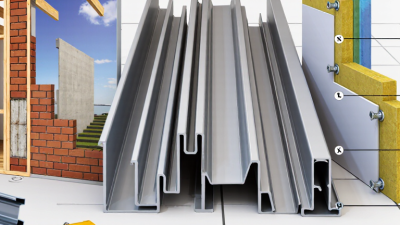
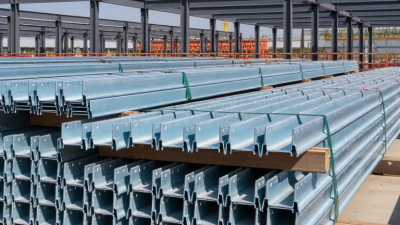
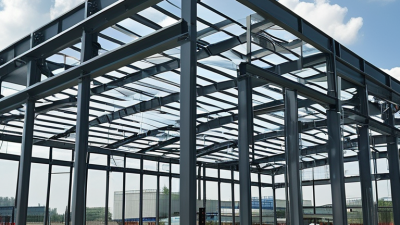
Choosing the right supplier requires more than comparing catalog prices. This guide, “2026 Best Light Steel Framing Suppliers for Global Buyers?”, examines manufacturers through practical purchasing criteria. These include steel grade, galvanized coating, roll-forming accuracy, engineering support, production capacity, and export experience. A reliable supplier should explain material specifications clearly. It should also provide traceable quality records and realistic delivery schedules.
Global buyers often face different building codes, climates, and inspection requirements. Strong suppliers can review structural drawings, recommend suitable profiles, and coordinate shop drawings before production. Their facilities should support consistent dimensions, clean cutting, accurate punching, and secure packaging. Factory audits, sample orders, and independent inspections can reveal problems before a full container leaves the port. Small details matter. Bent studs, missing labels, or weak bundles can create expensive delays on site.
This overview does not treat one company as perfect. Supplier performance may change with workload, region, and project complexity. Some firms offer excellent engineering but limited after-sales support. Others provide attractive prices but weaker documentation. Buyers should verify certifications, references, warranties, payment terms, and local compliance independently. That step is sometimes overlooked. The selected companies are assessed for demonstrated capability, transparent communication, and suitability for international projects. Practical experience remains valuable, but it should be supported by current evidence. Always request updated technical documents before signing a contract.
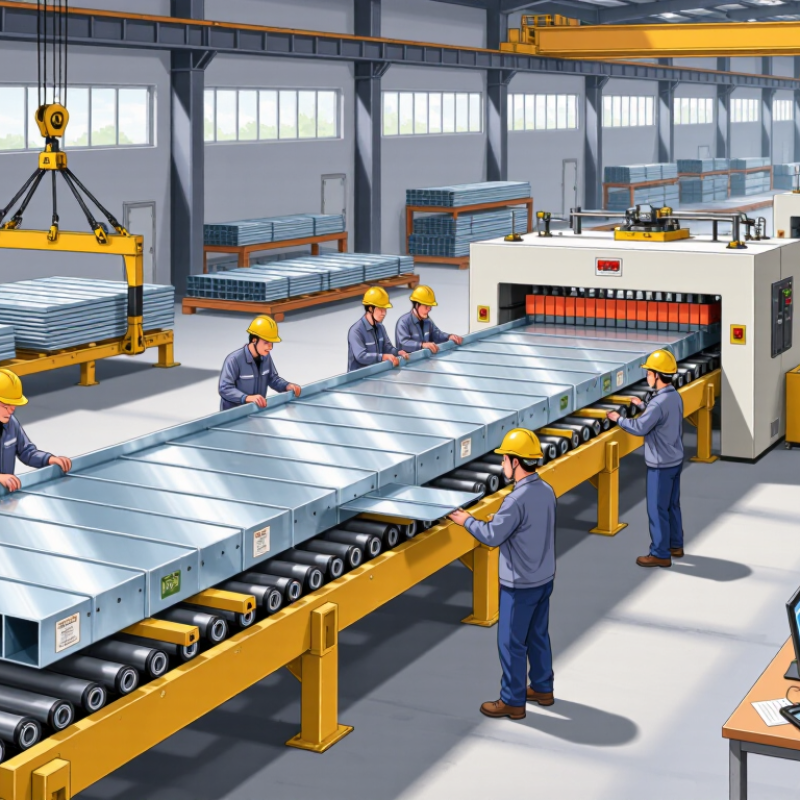
Global buyers should compare cold-formed steel by verified performance, not catalogue thickness alone. The common 0.75–3.0 mm range supports different spans, loads, and connection details. At 0.75 mm, flange distortion and screw pull-out deserve close checking. At 3.0 mm, cutting quality and transport weight become more important. AISI S240 provides structural framing requirements, while ASTM A1003/A1003M covers steel sheet specifications.
Coating choice affects service life. G60 denotes 0.60 oz/ft² total coating on both faces, approximately 183 g/m². Z275 specifies 275 g/m², so it is not an identical coating class. Buyers should request mill certificates, coating test results, and base-metal thickness separately. Salt exposure, cut edges, and trapped moisture can defeat a good specification.
The World Steel Association reported 1,892.2 million tonnes of global crude steel production in 2023. That scale supports broad supply capacity, but it does not prove framing consistency. Field checks often reveal small differences in lip geometry, punch alignment, and delivered thickness. One weak point is relying on nominal gauges without independent inspection. Ask for design calculations, yield strength data, dimensional tolerances, and batch traceability. A clean spreadsheet can still hide an unsuitable section.
Choosing the best light steel framing supplier in 2026 requires more than comparing factory quotes. Global buyers should examine verified production capacity, export experience, and quality controls. A supplier producing 2,000–5,000 tonnes monthly may handle large housing programs, but available capacity matters more than advertised capacity. Request recent shipment records, inspection reports, and factory video evidence.
Lead times commonly range from 25 to 60 days after approved drawings and deposit. Custom profiles, remote projects, and peak-season bookings can extend schedules. Pricing should be compared on a landed-cost basis. In 2026, indicative framing prices may range from USD 1,100 to USD 1,900 per tonne, excluding unusual engineering, duties, and inland delivery. Steel coil prices, galvanizing thickness, packaging, and currency movement can change the final figure. A low quote is not always efficient.
Tips: Ask for a line-item quotation, material certificates, tolerance data, and a clear replacement policy. Confirm monthly output and reserved production slots in writing. Use a sample wall panel before approving mass production. Small tests reveal large problems. I would also allow a schedule buffer of at least ten days, although disciplined suppliers may deliver earlier. This is an area where buyers often underestimate risk. Compare payment terms, warranty language, and communication speed, not just price.
The 2026 search for light steel framing suppliers should begin with technical compliance, not catalog size. World Steel Association data reports about 1.89 billion tonnes of crude steel production in 2023. That scale makes traceability essential for every coil, stud, and track.
A qualified supplier should show how its products align with AISI S240 for structural framing and EN 1993-1-3 for European cold-formed steel design. These standards address strength, stability, connections, and member behavior. ASTM C645 applies mainly to nonstructural gypsum board framing, so using it alone can create serious design gaps.
Ask for mill certificates, coating data, thickness tolerances, tensile results, and roll-forming inspection records. Check a sample bundle on arrival. Measure the flange width and coating, not only the printed label.
ISO 9001 supports controlled production, but it does not prove structural compliance. The ISO Survey has recorded more than 1.2 million ISO 9001 certificates worldwide, showing its broad adoption. It remains a management-system benchmark. Reliable suppliers also maintain batch identification, corrective-action logs, and documented calibration.
Request design calculations for wind, seismic, and fire conditions. A polished certificate may still hide weak engineering. Specifications can be incomplete. Supplier audits and independent testing deserve a place in the purchasing budget.
For global buyers, light steel framing suppliers should be judged by measurable production evidence, not polished catalogues. CNC precision begins with stable machine calibration, clear nesting files, and controlled material thickness. Ask for recent inspection records, cut lists, and dimensional reports from comparable projects. A 0.5 millimeter claim means little without its measurement method. Tolerance must be defined.
During supplier audits, inspect punched holes, screw channels, and panel connections. Small deviations can create visible alignment problems during installation. Request sample frames, not only photographs. Compare drawings with finished components. Paper is not proof. A reliable supplier explains rejected pieces, corrective actions, and operator checks without hiding weaknesses. This honesty is valuable, although many procurement teams overlook it.
Warranty terms require equally careful reading. Confirm coverage periods, corrosion exclusions, coating requirements, and responsibilities after delivery. A long warranty may exclude incorrect storage or site modification. Ask how claims are documented and resolved across borders. ICC-ES evaluation reports can strengthen technical confidence, but buyers must verify the report’s current edition, product scope, and installation conditions. An evaluation report does not automatically approve every project design. It supports compliance when the listed system matches the actual materials and use.
The strongest comparison combines factory evidence, third-party documentation, and project references. Still, no supplier performs perfectly every time. A minor tolerance issue may reveal a weak control process, or simply a recording error. Ask what happened next. That answer often separates a dependable manufacturer from an impressive salesperson.
Reference targets for global buyers reviewing CNC precision, tolerance control, corrosion protection, warranty coverage, and ICC-ES documentation. Values are technical screening benchmarks rather than company-specific claims.
Choosing a light steel framing supplier in 2026 requires more than comparing factory prices. A factory audit should inspect roll-forming lines, steel certificates, welding quality, storage conditions, and worker safety records. Request recent production photos and sample inspection reports. One visit is not enough. An audit captures one day, not every shipment.
Environmental Product Declarations can support credible carbon comparisons, but buyers must check their scope, system boundaries, and verification status. An EPD for raw profiles may not cover coatings, packaging, or transport.
Shipping costs also change quickly. A forty-foot container can lose capacity because of irregular bundles, protective frames, or poor loading plans. Get freight quotes using exact dimensions, weights, ports, insurance terms, and delivery responsibilities.
Tips: Ask for a landed-cost worksheet, not only a factory quotation. Confirm the tariff classification and country-of-origin documents with qualified customs advisers. Do not assume a lower duty rate applies automatically. A useful procurement file should include approved drawings, inspection points, packing photos, batch traceability, and delivery penalties. I have seen projects focus heavily on steel prices while overlooking port storage fees and replacement delays. That mistake is expensive, and sometimes the original budget cannot absorb it.